
All Over the World
This story is based on an impromptu meetup of a science and technology forum on social media, held after an international conference in Japan.
I found myself chatting with an outdoorsy guy from California.
"Science matters, sure. But technology matters too."
"Absolutely."
"Take MagnaCut, for example. It's a super steel for Knives—tough, hard, fine, and ridiculously corrosion-resistant."
"That's quite an endorsement."
"For someone who spends time both in the mountains and at sea, it's pretty much perfect."
"And then production moved to another manufacturer."
"Then?"
"The steel got even tougher and finer."
"How come?"
"The new manufacturer uses a much cleaner closed process."
"Same design, better execution."
"A genuine victory for technology."
"They're also producing the next-generation super steel, MagnaMax."
"Having just entered mass production as of June 2026, I'm excited to see how it performs in the field."
The Californian laughed.
"'Having just entered mass production' sounds a bit snobby."
"Sorry. I learned English during the awkward transition period when Japan was shifting from British-style English education toward American English. Everything got mixed together."
By then everyone had arrived, dinner had begun, and we were being asked what we'd like to drink afterward.
That reminded me of something.
Looking toward our Londoner friend, I borrowed a joke I'd seen online.
"I usually love light-roast coffee and drink a lot of it…"
I began in an unmistakably American accent.
"…however…"
My voice dropped slightly.
"…when I'm with you…"
I met her eyes, switched into my best imitation of a British accent, and continued:
"…I enjoy taking the time to savor the beautiful color and aroma of—tea."
I made sure to pronounce "tea" with exaggerated British enthusiasm.
The table erupted.
"What's that supposed to be? Your accent's gone British, but somehow you're speaking Italian English."
She narrowed her eyes.
"Are you flirting?"
The reaction was adorable.
Before I could answer, a professor from Peking University joined the conversation. Given his deep knowledge of tea culture, the timing was perfect.
"Tea has connected people since the days of the Silk Road…"
He began.
"Oh no," I laughed. "I've already heard enough stories involving the Cutty Sark. Let me ask something practical instead."
The professor looked almost offended.
"Old tea? Fermented tea? Of course not. Tea should be fresh green tea."
"So matcha might be the ultimate expression of freshness?"
"Exactly!"
The Londoner laughed.
"Japan really is all about things being fresh and raw."
The American joined in.
"We risk our lives drinking raw eggs because Rocky did it."
"And the Japanese respond, 'That's nice. We put raw eggs on rice.'"
The Londoner looked horrified.
"You even eat octopus raw."
The American pointed a finger.
"And horse."
The discussion somehow evolved into a passionate international symposium on raw food.
Even after the fish course arrived, the topic refused to die.
Finally I interrupted.
"Speaking of fish, this one may be cooked, but it doesn't seem very fresh."
The entire table froze.
"Do you know why?"
Nobody answered.
"Because I forgot to say something earlier."
I raised my glass.
"Hi, everyone! Long time no sea."
There was a collective groan.
Then laughter.
The atmosphere relaxed once more.
"Cheers!"
And the real conversations finally began.
Scientists Like Unidentified Objects
As the conversation drifted from one subject to another, food came up again.
"One thing that always amuses me in Japan is that a fish dish might simply be listed as Sauteed White Fish with Mushrooms."
"What's strange about that?"
"Nobody tells you what the fish actually is."
"That would never happen in a French course menu."
"True. Although French menu descriptions sometimes read like OSASCOMP grammar exercises. Still, I'd rather see 'white fish' than something like Angry Fish, Little Devil Style."
"Wait. Was that a subtle attack on Italian bars?"
The table laughed.
"The fish itself usually turns out to be something perfectly reasonable—hake or some other deep-sea fish people don't normally recognize."
"So what's the problem?"
"The mushrooms."
"The mushrooms?"
"Surely they're just mushrooms."
I shook my head.
"One day I asked:"
"These mushrooms are delicious. What kind are they?"
"They were picked this morning."
"Right, but what species are they?"
"Fresh from the mountain behind the house."
"Yes, but what are they called?"
"They're absolutely delicious."
"I never got an answer."
"That's terrifying."
"Maybe they were poisonous."
"Come on. This is Japan. People eat pufferfish."
"And somehow turn poisonous roots into food."
"Fair point."
"Maybe identifying the mushrooms was forbidden knowledge."
"Perhaps the mushroom gathering itself involved a sin."
I paused.
"Sin, huh…"
Suddenly, sin went trigonometric.
"That reminds me. I recently received a patent for a quasi-sin mixer."
"Of course you did."
"The Japanese even turn sin into technology."
"And somehow harvest patents while doing it."
The table groaned and laughed at the same time.
"What can I say? You all keep planting the seeds. I'm just grateful for the harvest."
A small smile appeared around the table.
"The hardest part of creating something new is naming it."
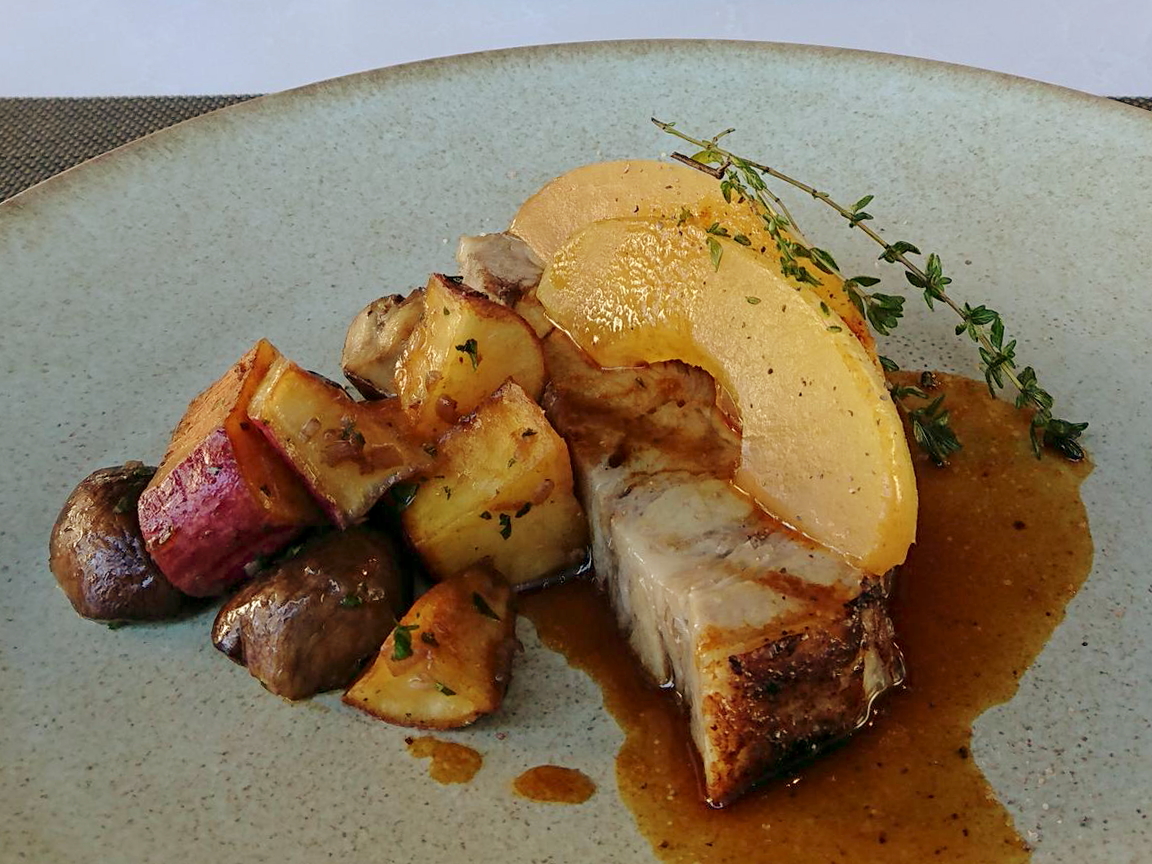
At that moment the meat course arrived.
"Speaking of new discoveries, let's eat this while it's still warm."
And so the international gathering continued, wandering cheerfully between science, technology, language, food, and whatever happened to appear next.